

Don’t Expect to Get What You Give: Understanding Emotional Boundaries and Reciprocity
Mindset graphics and emotional wellness illustrations resonate deeply across social media platforms like Facebook. By illustrating complex interpersonal dynamics—such as unrequited effort, over-giving, and expectations—these posts prompt readers to evaluate their relationships, emotional boundaries, and self-worth.
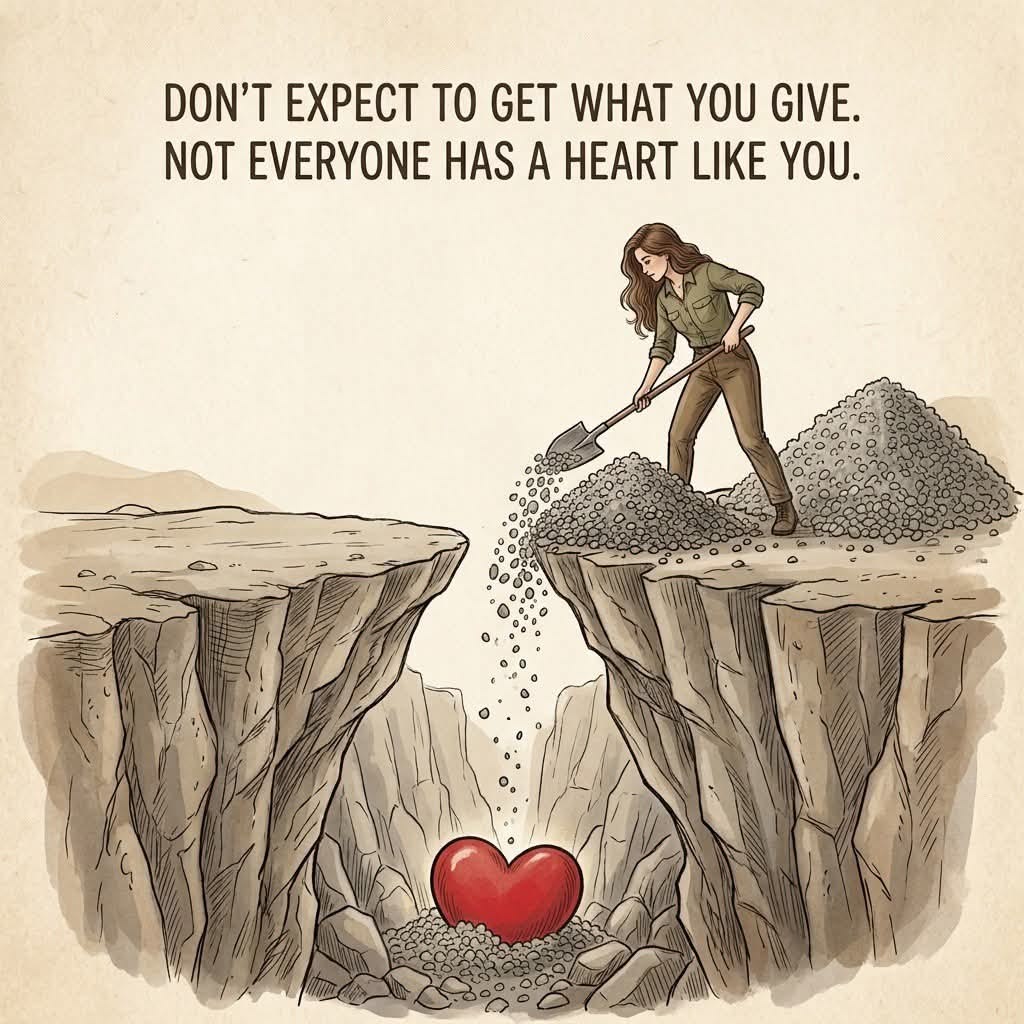
A powerful graphic depicts a woman standing near the edge of a steep canyon with a large pile of gravel behind her. She uses a shovel to toss stones into the chasm, attempting to build a bridge, but the stones drop into the deep abyss, slowly burying a large red heart resting at the bottom. The headline above reads:
“DON’T EXPECT TO GET WHAT YOU GIVE. NOT EVERYONE HAS A HEART LIKE YOU.”
This thought-provoking message highlights a vital emotional truth: expecting others to love, support, or sacrifice in the exact same way you do often leads to disappointment and emotional burnout.
In this guide, we break down the symbolism behind this visual metaphor, explore the psychology of expectations in relationships, and share practical strategies for establishing healthy emotional boundaries.
Visual Metaphor Breakdown
The image uses physical construction to represent the toll of effort without reciprocity:
                      [ EXPECTATION VS. RECIPROCITY ]
                                     |
      --------------------------------------------------------------
     |                                                              |
 [ SHOVELING STONES ]                              [ THE BURIED HEART ]
 • Unilateral effort & endless giving              • Emotional capacity & vulnerability
 • Trying to build a connection alone              • Being crushed under unreturned effort
 • Exhaustion from unreciprocated energy           • Loss of joy from unmet expectations
1. The Woman & The Shovel (Unilateral Effort)
The woman working tirelessly with a shovel represents someone pouring immense time, energy, and care into a relationship or situation. She is trying to bridge a gap alone, believing that if she gives enough, the distance will disappear.
2. The Buried Heart (Emotional Burnout)
The heart at the bottom of the canyon symbolizes genuine love, empathy, and capacity for compassion. Instead of bridging the gap, the endless stream of unappreciated effort accumulates like heavy rocks, slowly burying the heart under weight and disappointment.
Expectations vs. Unconditional Generosity
Understanding the difference between covert expectations and healthy giving helps protect mental clarity:
| Dimension | Giving with Unspoken Expectations | Giving from Authentic Abundance |
| Motivation | Hope that others will reciprocate in kind | Pure desire to help without transactional demands |
| Emotional Result | Resentment, frustration, and emotional fatigue | Peace, freedom, and preserved self-worth |
| Relationship Impact | Creates unwritten debts and tension | Fosters genuine connection or clear boundaries |
3 Ways to Protect Your Heart Without Closing It Off
-
Audit Your Emotional Investments: Notice where your energy goes. If a relationship consistently drains you without mutual care or support, recalibrate how much you pour into it.
-
Release the Projection Trap: Recognize that people love, communicate, and act based on their own emotional maturity and capacity—not yours. Expecting everyone to react as you would sets up inevitable disappointment.
-
Set Clear, Loving Boundaries: Giving generously does not mean sacrificing your self-respect. Learn to say “no” when giving compromises your mental or emotional well-being.
Conclusion
The statement “Don’t expect to get what you give. Not everyone has a heart like you” is not a call to become cold or cynical, but an invitation to protect your capacity for love. By giving freely without hidden transactions and maintaining clear boundaries, you preserve your emotional energy for connections that truly honor it.
Frequently Asked Questions (FAQ)
What does “Not everyone has a heart like you” mean?
It means that every individual possesses a unique level of emotional maturity, empathy, and capacity for care. Expecting others to mirror your specific level of generosity or devotion leads to unnecessary heartache.
How can I stop feeling resentful when people don’t match my effort?
Shift your mindset from transactional giving (“I do this so you will do that”) to intentional giving (“I choose to give this because it aligns with my values, but I will step back if it depletes me”).