


Can We Guess Your IQ? Understanding IQ Scores, Brain Levels, and Intelligence Testing
Interactive quizzes and brain teaser challenges achieve high engagement across social media platforms like Facebook. By inviting readers to test their problem-solving abilities and explore cognitive categories, these posts spark curiosity and friendly discussion among friends.
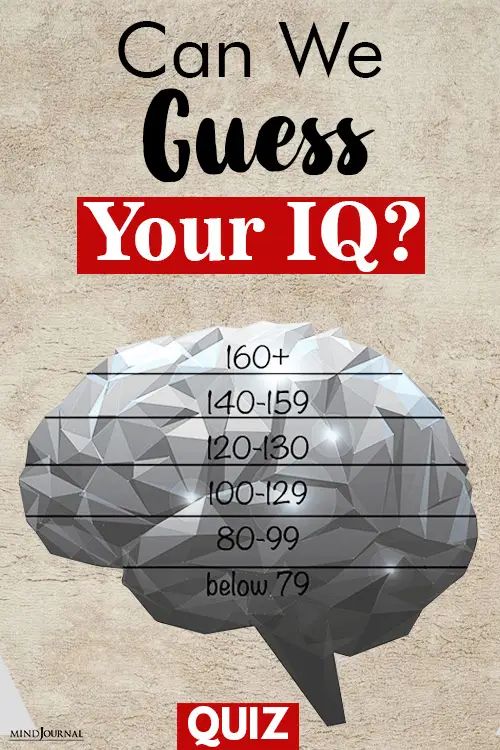
A popular quiz Graphic credit to MIND JOURNAL shows a low-poly stylized brain diagram divided into horizontal tier lines, with the heading:
“Can We Guess Your IQ?”
The visual illustrates various IQ score brackets mapped across brain levels:
-
160+: Highly Gifted / Genius
-
140–159: Exceptional Intelligence
-
120–130: Superior Intelligence
-
100–129: High Average / Average
-
80–99: Low Average
-
Below 79: Below Average
In this guide, we break down what IQ scores actually measure, how intelligence scales are structured, and how cognitive quizzes test your mental skills.
IQ Score Breakdown & Categories
Intelligence Quotient (IQ) scores are standardized measurements derived from tests designed to assess human intelligence and cognitive capabilities:
                       [ IQ SCORE CLASSIFICATION ]
                                     |
      --------------------------------------------------------------
     |                                                              |
 [ AVERAGE TO HIGH AVERAGE ]                           [ GIFTED & EXCEPTIONAL ]
 • 80 – 119 IQ Score Range                             • 120 to 160+ IQ Score Range
 • Standard population majority                        • Advanced logic, pattern detection, & speed
 • Strong practical problem solving                    • Complex abstract reasoning abilities
1. The Standard Range (80 – 119)
The vast majority of the population falls within this range. An average IQ score reflects strong everyday reasoning, functional memory, linguistic understanding, and practical logic.
2. The High & Exceptional Range (120 – 160+)
Scores above 120 represent superior cognitive performance. Individuals scoring in these top tiers typically display rapid pattern recognition, advanced spatial reasoning, high mathematical aptitude, and strong abstract problem-solving skills.
What Do Online IQ Quizzes Test?
Online brain quizzes assess multiple dimensions of cognitive functioning:
| Cognitive Area | Primary Skill Tested | Practical Application |
| Pattern Recognition | Identifying visual sequences and anomalies | Strategic planning and coding |
| Logical Reasoning | Deductive and inductive logic puzzles | Decision making and analytical thinking |
| Spatial Awareness | Mental rotation and geometric visualization | Architecture, design, and navigation |
| Verbal Comprehension | Vocabulary, analogies, and textual relationships | Communication and language mastery |
3 Ways to Keep Your Brain Sharp & Active
-
Solve Daily Logic Puzzles: Challenge your brain with crosswords, Sudoku, visual riddles, or math games to build mental flexibility.
-
Learn New Complex Skills: Engaging in activities like learning a new musical instrument or a foreign language stimulates neuroplasticity.
-
Prioritize Sleep & Physical Health: Cognitive speed and memory retention rely heavily on regular exercise, proper hydration, and quality rest.
Conclusion
Whether you score in the average range or hit the top tiers, the query “Can We Guess Your IQ?” offers a fun and engaging way to challenge your mental focus. Testing your brain regularly is a great habit for keeping your cognitive skills sharp at any age!
Frequently Asked Questions (FAQ)
What is considered a normal or average IQ score?
The standard average IQ score on most standardized tests is 100, with the vast majority of people scoring between 85 and 115.
Can you improve your IQ score with practice?
While baseline fluid intelligence is relatively stable, practicing logic puzzles, memory exercises, and critical thinking can significantly improve problem-solving speed and test performance.