


Make Respect a Habit: Why True Character Ignores Titles and Status
Inspirational quote graphics designed as newspaper headlines perform exceptionally well across digital platforms like Facebook. By presenting timeless moral lessons as bold news statements, these images spark meaningful discussions on social intelligence, ethics, and human connection.
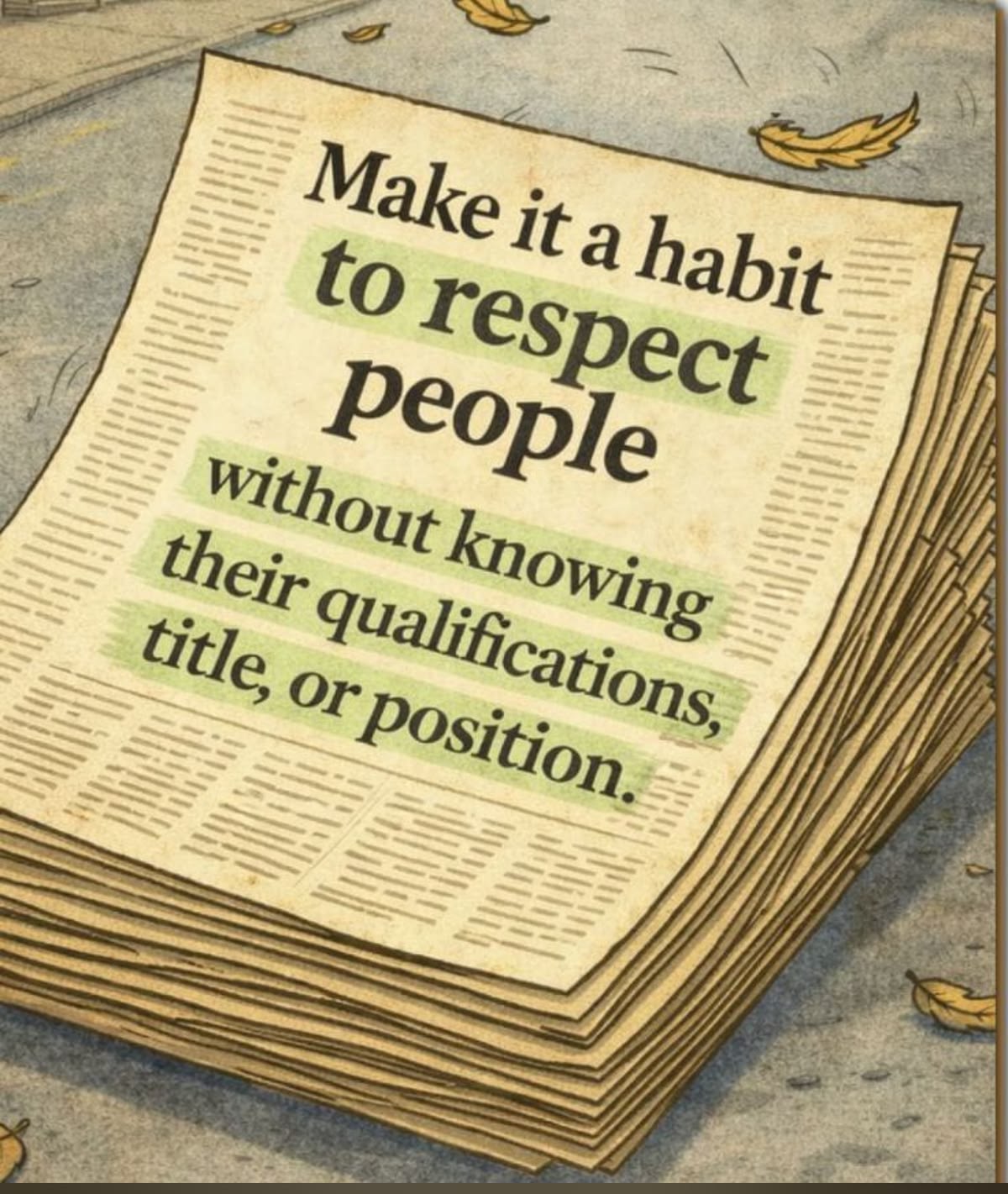
A newspaper graphic resting on a sidewalk features highlighted headline text that reads:
“Make it a habit to respect people without knowing their qualifications, title, or position.”
This simple message strikes at the heart of genuine integrity: treating every human being with fundamental dignity regardless of their socioeconomic standing, background, or social status.
In this guide, we break down the visual symbolism of the graphic, explore the psychology of unconditional respect, and share practical ways to practice universal dignity daily.
Breakdown of the Artwork & Visual Metaphor
The illustration uses everyday print media aesthetics to convey a universal principle of social conduct:
                      [ VISUAL SYMBOLISM ANALYSIS ]
                                    |
      --------------------------------------------------------------
     |                              |                               |
  [ NEWSPAPER HEADLINE ]     [ HIGHLIGHTED TEXT ]         [ STREET SETTING ]
 • Symbolizes timeless,       • Emphasizes the primary      • Represents everyday life,
   broadly shared truth         takeaway message              public interactions, & community
Key Symbolic Elements:
-
The Newspaper Format: Presents the quote as a noteworthy, fundamental truth meant to be broadcast publicly and reflected on daily.
-
Highlighted Text: Directs immediate focus to the core actionable habit: offering respect unconditionally before evaluating someone’s credentials.
-
The Ground/Street Setting: Serves as a grounding reminder that real character is demonstrated in everyday, mundane interactions with people from all walks of life.
Conditional Respect vs. Universal Respect
Understanding how status-based respect differs from character-driven respect highlights key differences in emotional maturity:
| Aspect | Conditional Respect (Status-Driven) | Universal Respect (Character-Driven) |
| Primary Trigger | Rank, job title, wealth, or influence | Inherent human dignity and shared humanity |
| Behavioral Pattern | Polite to superiors, indifferent or rude to subordinates | Consistently polite and attentive to everyone |
| Underlying Motivation | Self-interest, networking, or fear | Genuine empathy, integrity, and humility |
| Social Impact | Reinforces hierarchy and social friction | Builds trust, inclusive communities, and harmony |
How to Practice Unconditional Respect Daily
1. Treat Everyone as an Equal
Whether interacting with a CEO, a service worker, a colleague, or a stranger, maintain the same warm tone, eye contact, and courtesy.
2. Practice Active Listening Without Judgment
Listen to people’s ideas and experiences without pre-evaluating their worth based on their background or resume.
3. Check Unconscious Biases
Notice when your mind tries to categorize people based on appearance or perceived status, and consciously reset your attitude to default kindness.
Conclusion
The principle “Make it a habit to respect people without knowing their qualifications, title, or position” serves as a timeless benchmark for personal integrity. When respect becomes a default habit rather than a transaction, you create stronger connections and help foster a more compassionate world.
Frequently Asked Questions (FAQ)
What does it mean to give unconditional respect?
Giving unconditional respect means offering basic human courtesy, active listening, and dignity to every individual regardless of their social rank, wealth, or achievements.
Why is how you treat service workers considered a test of character?
Interacting with people who hold no authority over you reveals whether your kindness is authentic or merely practiced for personal gain or social advancement.