

Success Is Not Lasting, Failure Is Not Final: Understanding the Building Blocks of Growth
Inspirational quote graphics and motivational memes resonate deeply on social media because they capture universal human truths about perseverance, resilience, and personal growth.
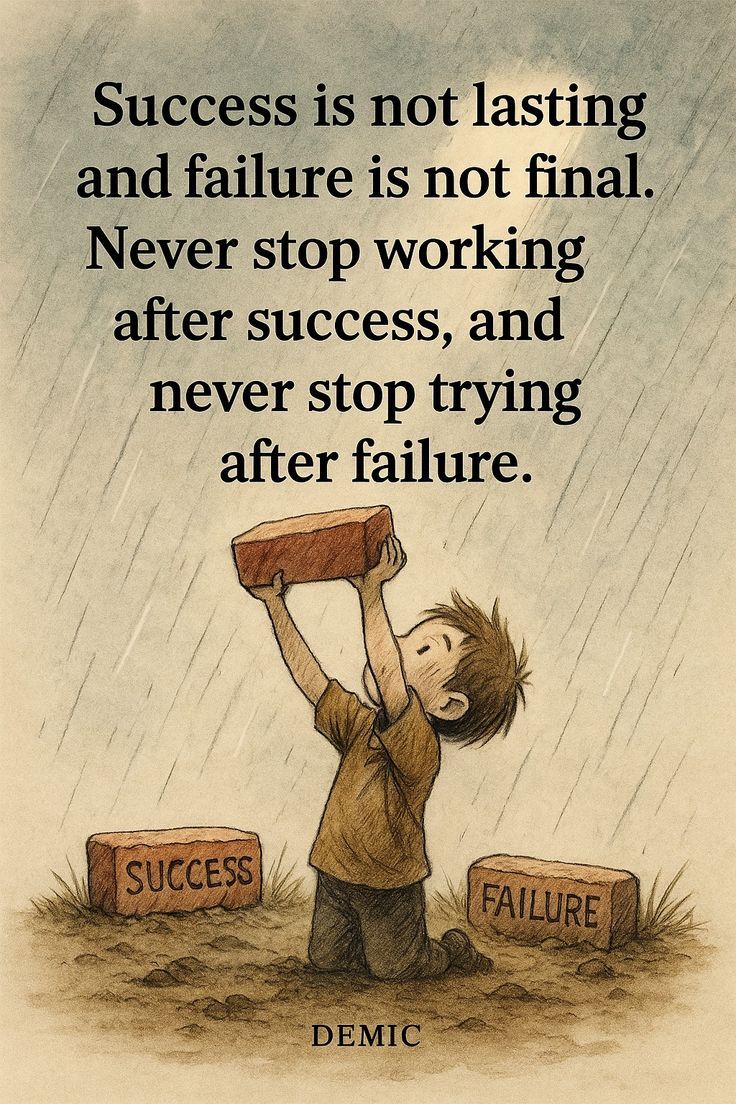
A widely shared illustration depicts a young boy kneeling in the rain, lifting a brick toward the sky alongside two bricks on the ground labeled “SUCCESS” and “FAILURE,” accompanied by a compelling quote:
“Success is not lasting and failure is not final. Never stop working after success, and never stop trying after failure.”
This powerful message reminds us that neither victory nor defeat defines our ultimate destination; rather, both serve as raw materials for long-term progress.
In this guide, we break down the core message behind this motivational artwork, analyze the symbolism in the imagery, and explore practical strategies for maintaining a continuous growth mindset through both triumphs and setbacks.
Breakdown of the Artwork & Quotes
The visual components of the illustration work together to create an uplifting narrative about resilience:
                      [ MOTIVATIONAL ARTWORK ANATOMY ]
                                     |
      ---------------------------------------------------------------
     |                                                               |
 [ THE ATMOSPHERE ]           [ THE SYMBOLIC BRICKS ]    [ THE CENTRAL LESSON ]
 • Heavy rain & storm clouds  • Brick 1: "SUCCESS"       • Growth requires continuous
 • Highlights adversity and     • Brick 2: "FAILURE"       effort regardless of current
   ongoing struggle           • Brick 3: Active work     circumstances
Key Symbolic Elements:
-
The Rain and Weather: The falling rain represents life’s inevitable obstacles, uncertainty, and difficult seasons. Perseverance is required even when conditions aren’t ideal.
-
The “SUCCESS” and “FAILURE” Bricks: Laying both bricks on the same ground shows that both outcomes have equal weight as learning experiences and stepping stones.
-
Lifting the Third Brick: The child actively lifting a brick toward the light symbolizes forward movement—showing that building your life is an ongoing project.
Mindset Comparison: Static vs. Growth Perspective
| Aspect | Static / Outcome-Focused Mindset | Continuous Growth Mindset |
| View of Success | A permanent destination; leads to complacency | A temporary milestone; signals time to set new goals |
| View of Failure | A final verdict; leads to giving up | A temporary setback; provides valuable feedback |
| Primary Focus | The result (winning or losing) | The process (learning and refining) |
| Long-Term Action | Stops trying after failure or reaching a goal | Keeps building regardless of short-term outcomes |
How to Apply This Mindset in Daily Life
1. Guard Against Complacency After Success
When you achieve a major goal, celebrate your success, but remain humble and focused. Continuous effort is required to sustain momentum and reach higher levels of growth.
2. Reframe Failure as Feedback
Failure is not a reflection of your worth; it is simply information about what didn’t work. Reanalyzing mistakes allows you to adjust your approach and try again with greater wisdom.
3. Focus on Consistency Over Intensity
Building long-term success is like laying bricks one by one. Daily, consistent effort compounds over time, creating a solid foundation that withstands life’s storms.
Conclusion
The message “Success is not lasting and failure is not final” offers a timeless reminder that life is a continuous journey of building. By treating every success and failure as a single brick in your foundation, you cultivate a resilient mindset capable of achieving long-term greatness.
Frequently Asked Questions (FAQ)
What does “failure is not final” mean?
It means that experiencing a defeat or setback does not mark the end of your journey unless you choose to quit. Every failure carries lessons that prepare you for future success.
Why is success described as “not lasting”?
Success is not a permanent state. Without continued effort, adaptation, and hard work, past achievements fade and momentum is lost.