

The “Fail at Easy Games” Mobile Ad Strategy: Meme Explained
Viral internet memes frequently poke fun at mobile game advertisements that feature absurdly easy puzzles paired with overly dramatic claims. By highlighting the contrast between basic questions and extreme difficulty ratings, these memes call out modern digital advertising tropes.
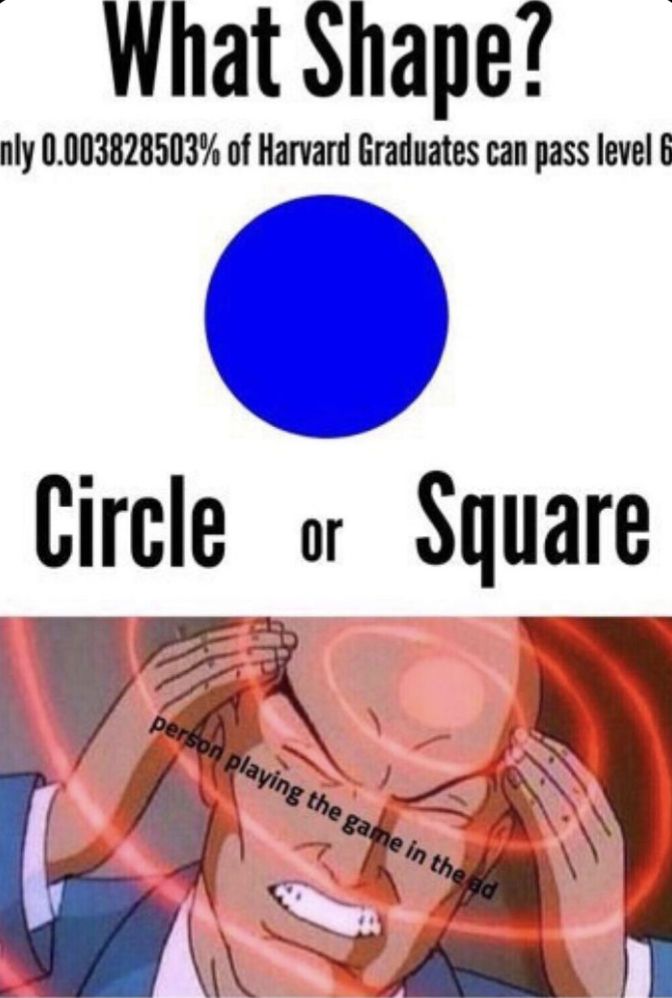
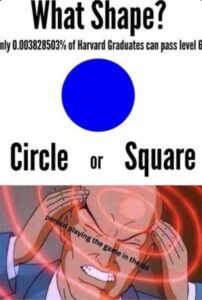
A widely shared meme image contrasts an ridiculously simple question with a struggling anime character:
“What Shape?”
“Only 0.003828503% of Harvard Graduates can pass level 6”
(Shows a solid blue circle)
“Circle or Square”
(Reaction image below: “person playing the game in the ad” holding their head in extreme frustration)
This meme parodies the ubiquitous “fail at simple tasks” marketing tactic used across social media and mobile gaming platforms.
In this guide, we analyze the visual elements of the meme, explain why mobile game ads use intentionally terrible gameplay, and break down the psychology behind these engagement strategies.
Meme Structure Breakdown
The graphic combines two distinct viral tropes into a single relatable joke:
                [ MOBILE GAME AD MEME ANATOMY ]
                               |
      --------------------------------------------------
     |                         |                        |
 [ ABSURD PROMPT ]      [ TRIVIAL SHAPE ]        [ REACTION IMAGE ]
 • "Only 0.003828503%    • A basic blue circle    • "Person playing the
   pass level 6"          • Options: Circle        game in the ad"
 • Hyperbolic stat        or Square               • Over-dramatic stress
Key Elements Analyzed:
-
Hyperbolic Failure Rates: Prompts like “99% of people fail” or “Only 0.003% of Harvard Graduates can pass” create artificial prestige around trivial tasks.
-
The Blue Circle: Presenting a simple geometric shape as a high-stakes puzzle creates an immediate comedic contrast.
-
The Stressed Player Reaction: The lower image shows a character holding their temples as if enduring intense mental strain, mocking the “fake players” in mobile ad videos who consistently fail obvious choices.
Comparison Table: Ad Fiction vs. Gaming Reality
| Element | Mobile Game Ad Representation | Actual Reality / Truth |
| Puzzle Difficulty | Claimed to be impossible (“Level 6”) | Trivial preschool-level identification |
| Player Competence | Fails to identify a circle | Designed to frustrate the viewer into clicking |
| Target Goal | Highlighting complex gameplay | Generating rage-bait clicks and app installs |
The Marketing Psychology: Why Mobile Ads Play Dumb
Mobile game advertisers deliberately depict players failing incredibly simple tasks for specific psychological reasons:
-
The “I Can Do Better” Effect (Reverse Psychology): Watching someone struggle with an obvious problem triggers a cognitive reaction in viewers. The audience feels an urge to download the app just to prove how easy it actually is.
-
Rage-Bait Engagement: Annoying or absurd ads prompt users to comment, share, and post memes about them, generating free organic exposure for the advertising campaign.
Conclusion
The “Circle or Square” meme perfectly captures the absurdity of fake mobile game gameplay ads. By contrasting a simple blue circle with an intense, struggling reaction face, it turns a common marketing nuisance into classic internet humor.
Frequently Asked Questions (FAQ)
What shape is shown in the meme?
The shape featured in the meme is a blue circle.
Why do mobile game ads show players making obvious mistakes?
Advertisers use intentional fail-gameplay as reverse psychology to frustrate viewers into downloading the app so they can solve the simple puzzle correctly themselves.