

To Enter the Kingdom of Heaven: Deconstructing the Metaphor of the Two Roads
Religious illustrations and conceptual digital art frequently draw upon biblical allegories to depict spiritual choices, personal discipline, and moral pathways. By contrasting ease with struggle, artists visualize the classic theme of the “wide gate” versus the “narrow gate.”
A viral inspirational graphic presents a stark choice under a prominent title:
“TO ENTER THE KINGDOM OF HEAVEN”
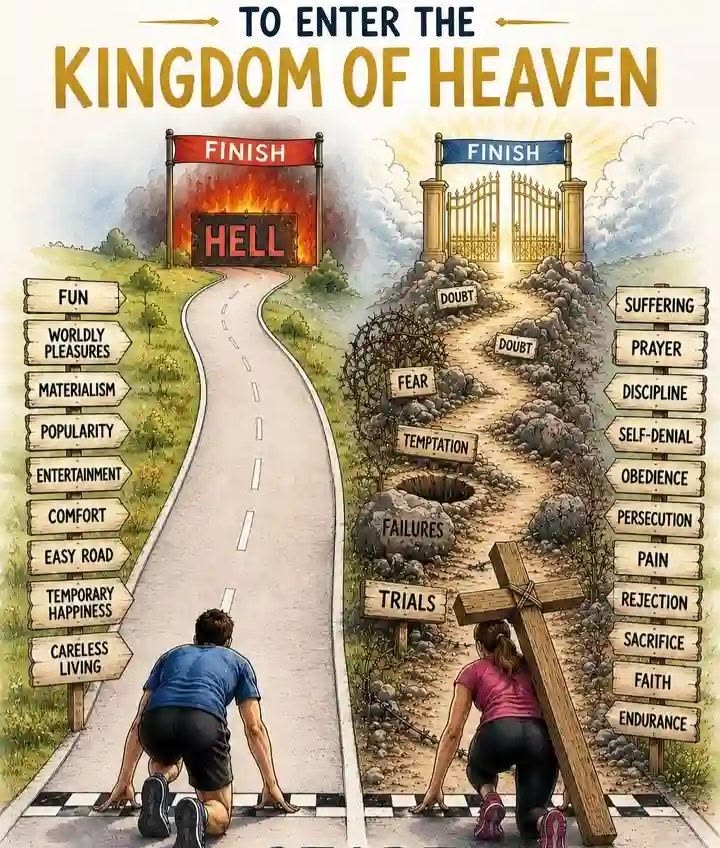
The artwork depicts two runners at a starting line looking toward two vastly different destinations. On the left, a smooth, paved road leads to a fiery archway marked “HELL”. On the right, a steep, rocky mountain path leads to golden gates bathed in celestial light representing “HEAVEN”.
Below, we break down the visual symbolism of this illustration, the biblical references behind it, and the psychological meaning of spiritual endurance!
Visual Breakdown: The Two Paths
The composition relies on strong visual contrast, color palettes, and directional signage to detail each journey:
1. The Easy Road (The Worldly Path)
-
Visual Representation: A wide, smooth asphalt road with a runner in athletic wear ready to sprint. The path is flat and effortless, leading toward a burning archway.
-
Signpost Themes: Lined with signs denoting immediate gratification and comfort, such as Fun, Worldly Pleasures, Materialism, Popularity, Entertainment, Comfort, Easy Road, Temporary Happiness, and Careless Living.
-
Symbolism: Represents pursuing immediate pleasure, self-indulgence, and superficial success without moral constraints or spiritual discipline.
2. The Narrow Path (The Spiritual Journey)
-
Visual Representation: A rugged, boulder-strewn trail winding up a steep hill. A runner kneels carrying a heavy wooden cross on her back. Obstacles like pit-holes and thorny bushes block the terrain, but golden gates shine at the peak.
-
Signpost Themes: Lined with signs detailing virtues, trials, and spiritual practices, such as Endurance, Faith, Sacrifice, Rejection, Pain, Persecution, Obedience, Self-Denial, Discipline, Prayer, and Suffering.
-
Obstacle Signs: Labels along the trail highlight inner hurdles: Trials, Failures, Temptation, Fear, and Doubt.
-
Symbolism: Represents the commitment to spiritual growth, moral integrity, and enduring hardship for long-term fulfillment and eternal salvation.
Direct Comparison of the Journeys
| Aspect | The Wide Path (Left) | The Narrow Path (Right) |
| Terrain | Smooth, flat, paved highway | Steep, rocky, thorn-filled trail |
| Burden / Gear | Light athletic wear, no additional load | Carrying a heavy wooden cross |
| Short-Term Experience | Comfort, entertainment, temporary happiness | Trials, doubt, self-denial, persecution |
| Virtues Required | None (careless living) | Faith, prayer, discipline, endurance |
| Final Destination | Fiery gate (“HELL”) | Golden gates (“HEAVEN”) |
Theological & Philosophical Foundations
Why does the metaphor of “the two roads” remain one of the most enduring themes in inspirational art?
1. Biblical Roots: Matthew 7:13–14
The imagery directly reflects the Sermon on the Mount, where Jesus teaches about the two gates:
“Enter through the narrow gate. For wide is the gate and broad is the road that leads to destruction, and many enter through it. But small is the gate and narrow the road that leads to life, and only a few find it.”
2. The Theology of the Cross
The figure carrying a cross references the call to discipleship found in Gospels like Matthew 16:24 (“If anyone would come after me, let him deny himself and take up his cross and follow me”). The cross represents the heavy lifting, self-sacrifice, and personal responsibility required to walk a faithful path.
3. Immediate Gratification vs. Long-Term Fulfillment
From a psychological standpoint, the image contrasts short-term ease with long-term purpose. The left path offers instant, temporary satisfaction at the cost of eventual ruin, while the right path demands short-term hardship, discipline, and endurance to reach ultimate spiritual peace.
Conclusion
This vivid graphic acts as a visual sermon, urging viewers to evaluate the direction of their daily choices. It reminds us that meaningful spiritual victory and lasting growth are rarely found on the easiest road, but rather through resilience, sacrifice, and unwavering faith.
Frequently Asked Questions (FAQ)
What is the main message of the “To Enter the Kingdom of Heaven” image?
The graphic illustrates that the path to heaven requires faith, self-discipline, and enduring hardship (“carrying your cross”), whereas the path of short-term worldly pleasures and self-indulgence leads away from God.
What do the signs along the right path represent?
The signs on the right path highlight both the virtue needed (Faith, Prayer, Endurance) and the inevitable struggles faced (Trials, Fear, Doubt, Rejection) during a genuine spiritual journey.