


Control Your Anger: Why Impulsive Reactions Lead to Danger
Anger is a natural human emotion, but when left unchecked, it can cloud our judgment, destroy relationships, and lead to irreversible mistakes. Learning to master our emotional responses is one of the most critical skills for personal success and peace of mind.
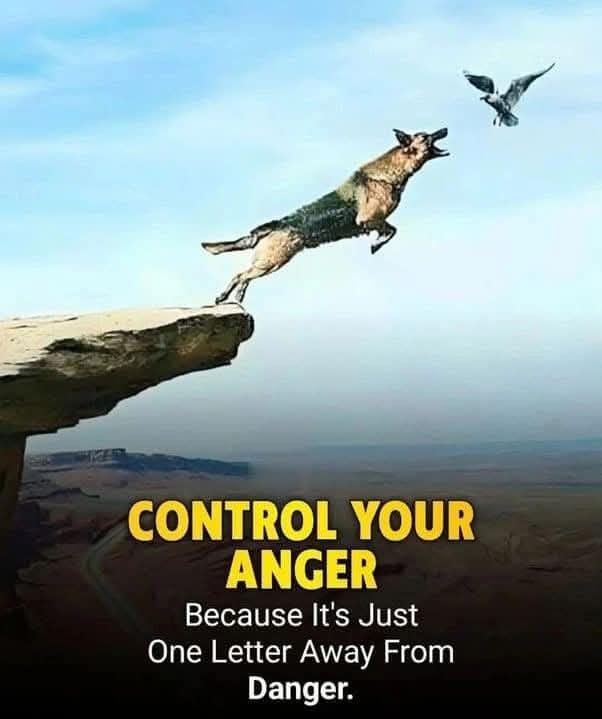
A striking visual graphic captures this concept dramatically:
A German Shepherd dog leaps recklessly off a high cliff edge into mid-air, barking in pursuit of a bird flying just out of reach.
Text across the image reads: “CONTROL YOUR ANGER. Because It’s Just One Letter Away From Danger.”
This visual serves as a powerful metaphor for how impulsivity makes us overlook real risks while chasing temporary emotional outbursts.
Below, we explore the psychology of anger, the connection between “Anger” and “Danger,” and practical strategies for maintaining self-control!
The Anatomy of an Impulsive Reaction
When anger strikes, the brain’s emotional center (the amygdala) often hijacks logical thinking before the rational prefrontal cortex can evaluate the situation:
-
The Trigger: An external event occurs (a provocation, frustration, or minor setback).
-
The Blind Leap: Without a pause, impulse takes over—driving an immediate reaction based on emotion rather than reason.
-
The Consequence: Just like leaping off a cliff edge, once an angry word or action is put out into the world, the momentum cannot be reversed.
Comparison Matrix: Emotional Reaction vs. Controlled Response
| Feature | Impulsive Angry Reaction | Controlled Mindful Response |
| Brain Region Used | Amygdala (Fight-or-Flight) | Prefrontal Cortex (Rational Thinking) |
| Pace | Immediate, instinctual, aggressive | Paused, measured, strategic |
| Focus | Destroying the source of frustration | Finding a constructive solution |
| Long-Term Outcome | Regret, damaged trust, elevated risk | Preserved relationships, self-respect |
4 Effective Strategies to Master Your Emotions
1. Remember the “One-Letter Shift”
Keep the phrase in mind: Anger is just one letter away from Danger (adding a “D” to “ANGER” spells “DANGER”). This simple linguistic reminder helps anchor your awareness when emotions flare up.
2. Practice the 10-Second Pause
Before responding to a heated text, comment, or situation, force yourself to take three deep breaths and count to ten. This brief window gives your logical brain time to step in.
3. Evaluate the Cliff Edge
Ask yourself: “Is this reaction worth the long-term cost?” Winning a fleeting argument is rarely worth damaging an important relationship or your personal integrity.
4. Channel Energy Constructively
Anger provides high physical energy. Instead of letting it explode outwardly, redirect that energy into physical exercise, journaling, or problem-solving.
Conclusion
Reckless emotional leaps might feel satisfying for a split second, but the landing is rarely pleasant. Master your anger, protect your peace, and choose reflection over reaction every time!
Frequently Asked Questions (FAQ)
What is the difference between feeling anger and acting on anger?
Feeling anger is a natural, automatic emotion. Acting on anger is a choice. Experiencing the feeling is fine, but controlling the behavioral output determines the outcome.
How does emotional control improve decision-making?
Emotional control prevents impulse buying, aggressive confrontations, and hasty career moves, allowing you to weigh pros and cons clearly before acting.