
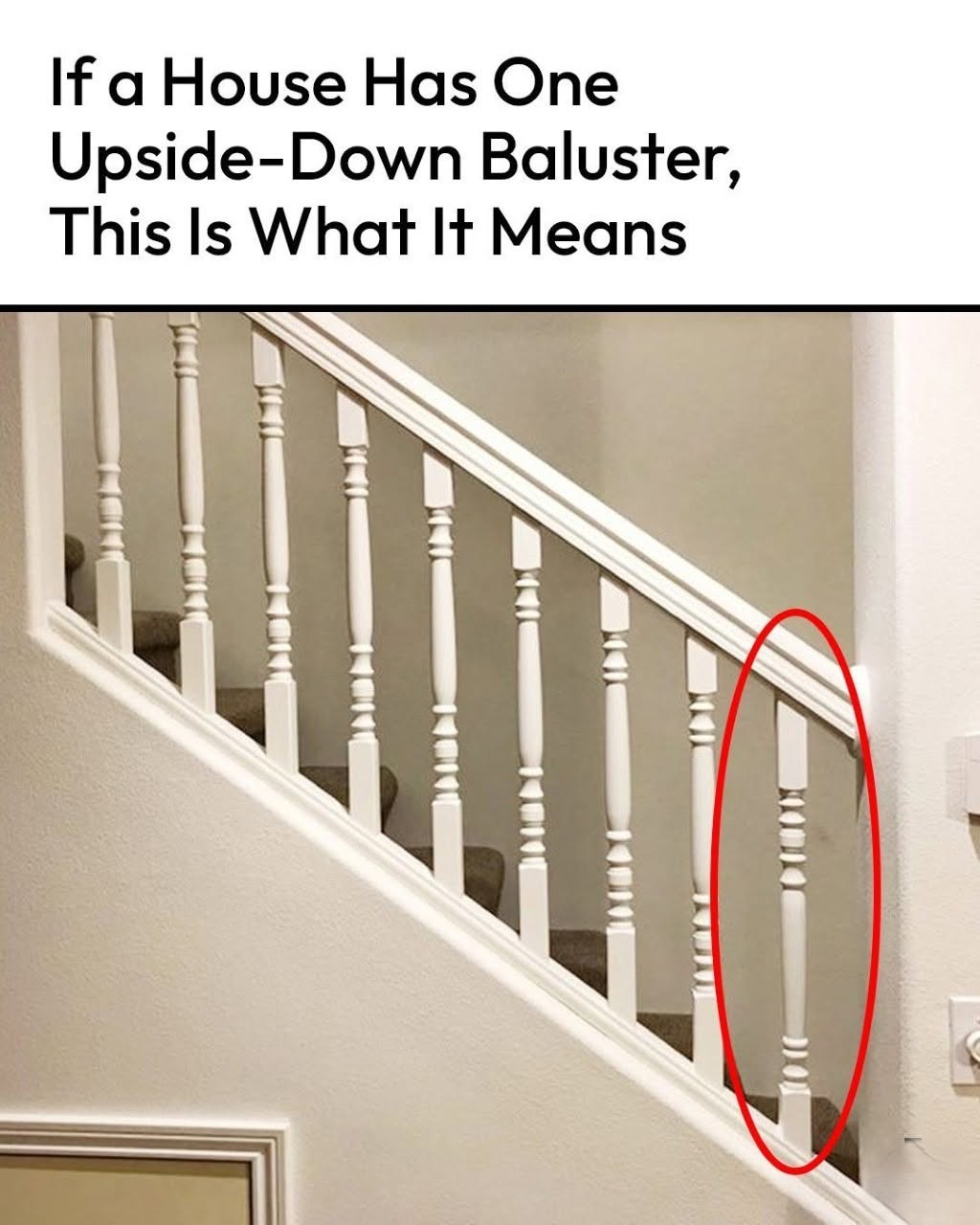


If you’ve ever inspected a staircase in an older home—or even a modern build—and noticed a single spindle (baluster) installed upside down, you might have assumed it was a careless mistake by a distracted carpenter. However, this curious design detail is surrounded by centuries of architectural folklore, craftsmanship traditions, and fascinating urban legends.
From the famous “humility spindle” theory to practical woodworking mistakes, this subtle detail has captured the imagination of home lovers and history buffs alike.
Below, we explore the origins, myths, and reality behind the upside-down baluster!
The Top Theories Behind the Inverted Spindle
1. The “Humility Spindle” Tradition
The most widely cited piece of folklore claims that 19th-century craftsmen deliberately inverted one baluster as an act of spiritual humility. According to tradition, craftsmen believed that only a higher power could achieve true perfection. Installing a deliberate defect was thought to show modesty and avoid inviting bad luck or hubris upon the household.
2. The Paid-Off Mortgage Legend
Another popular home tradition suggests that a homeowner would flip one baluster upside down once the mortgage on the property was completely paid off. It served as a subtle, private sign of financial freedom and pride of ownership.
3. The Master Carpenter’s Signature
In some historic building traditions, master builders would intentionally invert a single piece as a subtle “signature” mark to identify their handiwork or indicate that the staircase construction was officially complete.
4. Simple Human Error
While folklore gives the upside-down baluster symbolic meaning, modern woodworkers and stair builders often point out the simplest explanation: an honest mistake during installation! When installing dozens of repetitive, semi-symmetrical wood turnings, it is surprisingly easy for a carpenter to accidentally secure one upside down before priming and painting over it.
3 Fascinating Historic Home Architectural Traditions
-
Witch Windows: In Vermont homes, diagonal windows were built into upper gables under the traditional belief that witches could not fly their broomsticks through slanted glass.
-
Haint Blue Porch Ceilings: Soft blue porch ceilings in the American South were traditionally painted to ward off evil spirits (and practically, to deter wasps and birds from nesting).
-
The “Final Brick” Mystery: Similar to the humility spindle, ancient stonemasons across various cultures would leave a single stone uncarved or misaligned to honor the idea of natural imperfection.
Conclusion
Whether your inverted staircase spindle is a secret token of historic humility, a celebration of paying off a home loan, or just a quirky blunder by an overworked builder, it adds unmistakable character and a great talking point to any home!
Frequently Asked Questions (FAQ)
What is the technical name for a staircase spindle?
While commonly called a spindle, the formal architectural term is a baluster. A series of balusters supporting a handrail is collectively called a balustrade.
Should I fix an upside-down baluster in my home?
Unless it poses a structural safety hazard, most historic home enthusiasts prefer keeping upside-down balusters intact! It adds charm, personality, and tells a unique story about your home’s construction history