

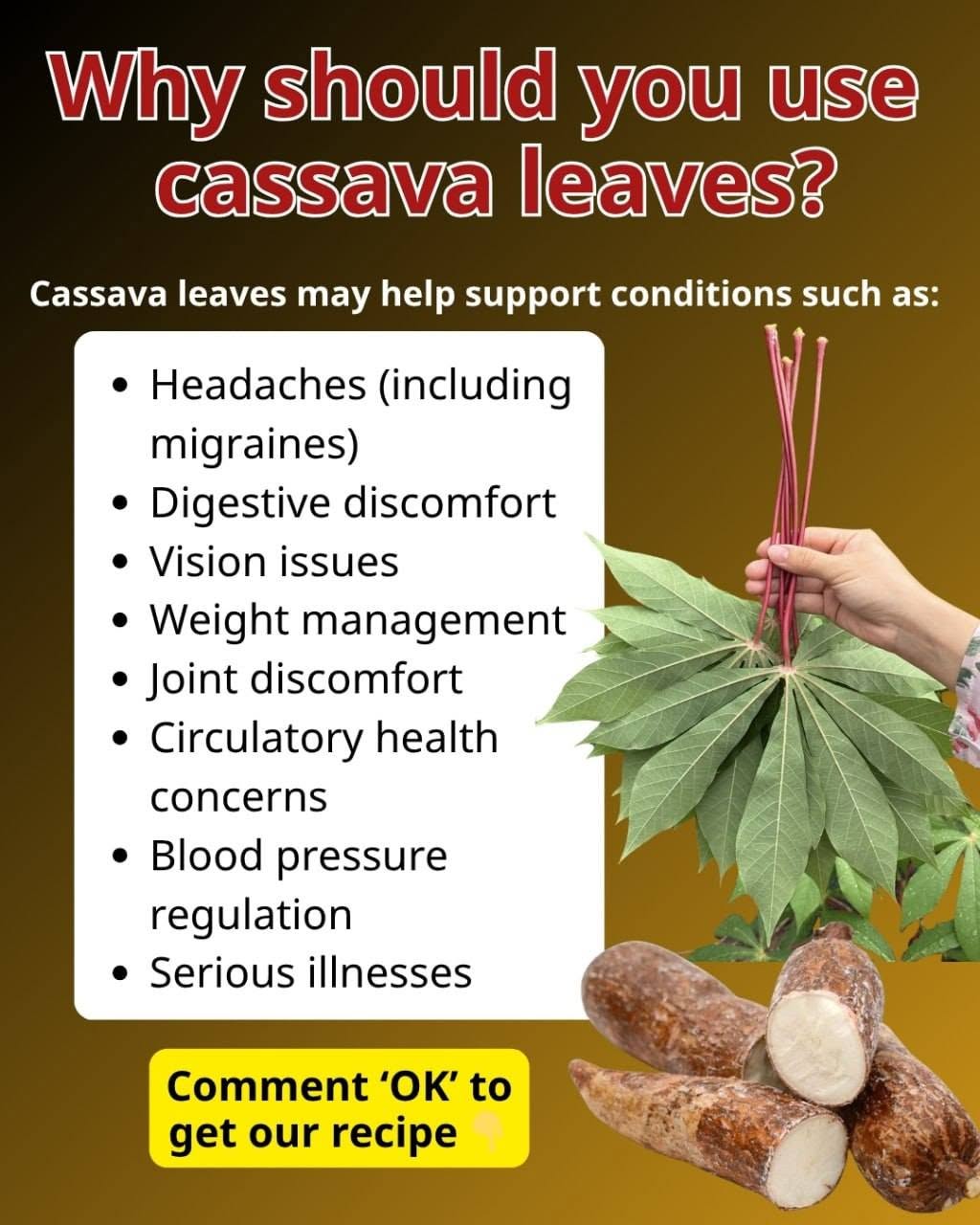


Cassava (Manihot esculenta) is widely cultivated across Africa, Asia, and South America for its starchy roots. However, the leafy green tops of the cassava plant are equally remarkable. In many traditional cuisines, cooked cassava leaves are enjoyed in savory stews, soups, and sauces for their rich flavor and high nutrient density.
Viral health posts often attribute broad medical benefits to cassava leaves, claiming they manage everything from migraines and joint pain to serious illnesses. While cassava leaves are highly nutritious, understanding their true dietary value and essential safety protocols is vital before incorporating them into your kitchen.
Below, we break down the proven nutritional benefits of cassava leaves, vital safety warnings regarding raw consumption, and how to cook them safely.
Proven Nutritional Benefits of Cassava Leaves
1. High in Plant-Based Protein
Unlike many green leafy vegetables, cassava leaves are surprisingly rich in protein and contain essential amino acids, making them an important plant-based protein source in many traditional diets.
2. Excellent Source of Vitamin C & Iron
Cassava leaves contain generous amounts of Vitamin C, beta-carotene (Vitamin A precursor), and iron. Vitamin C acts as a powerful antioxidant that supports immune function and aids in iron absorption.
3. Rich in Dietary Fiber
The high dietary fiber content in cooked cassava greens supports digestion, promotes healthy gut bacteria, and aids in sustained energy and weight management.
⚠️ CRITICAL SAFETY WARNING: Never Eat Cassava Leaves Raw
While cassava leaves offer impressive nutrition, raw cassava leaves contain naturally occurring cyanogenic glycosides (such as linamarin), which can break down into toxic hydrogen cyanide if consumed raw or undercooked.
To make cassava leaves completely safe for consumption, they MUST be thoroughly processed and cooked:
-
Pound or Mash First: Pounding or finely chopping the leaves breaks down cell walls, allowing cyanogenic compounds to escape as gas.
-
Boil Thoroughly: Boil the leaves in open water (uncovered) for at least 15 to 20 minutes (or simmer in traditional long-cooked stews) to neutralize any remaining toxins completely.
-
Discard Initial Boiling Water: Drain and discard the initial water used for boiling before adding the leaves to sauces, coconut milk, or stews.
Fact-Checking Health Claims
While cooked cassava greens make a wholesome, nutrient-dense addition to meals, relying on them as a primary cure for complex conditions requires proper health context:
-
Serious Illnesses & Chronic Conditions: Cassava leaves are a supportive food, not a substitute for professional medical care, diagnosis, or prescription treatments.
-
Migraines & Joint Pain: While the antioxidants in cassava greens help combat oxidative stress, structural joint pain and migraines require personalized medical evaluation.
Conclusion
When prepared with traditional safety techniques—pounding, thorough boiling, and long simmering—cassava leaves are a delicious, protein-packed green vegetable that enriches any diet!
Frequently Asked Questions (FAQ)
Can you eat cassava leaves raw in a salad or smoothie?
No, absolutely not. Raw or undercooked cassava leaves can cause cyanide toxicity. They must always be boiled thoroughly before eating.
What do cassava leaves taste like when cooked?
Cooked cassava leaves have a hearty, earthy taste and texture similar to spinach, kale, or collard greens. They absorb rich flavors wonderfully when cooked with garlic, onions, peanuts, or coconut milk!